Day by day, {couples} get engaged, vacationers take pictures, pals meet and museum-goers delight amid the lampposts of Chris Burden’s City Mild, the beautiful sculpture in entrance of the Los Angeles County Museum of Artwork. It’s exhausting to imagine that this magnetic piece of public artwork has solely been there since 2008—it’s already virtually as recognisable because the famed Hollywood signal.
City Mild is consultant of each the massive swings and intentional investments which have nurtured the museum from a fledgling offshoot of the catch-all LA Museum of Historical past, Science and Artwork (now cut up into the Pure Historical past Museum of LA County) to a world-class artwork establishment. Very like Los Angeles itself, LACMA has a startup mentality and a willingness to take dangers that has served it nicely because it opened the doorways to its present location on Wilshire Boulevard in 1965. Each 20 years or so, the museum has dedicated to a brand new part, from the preliminary transfer from Exposition Park within the mid-Nineteen Sixties, opening the Pavilion for Japanese Artwork within the 80s or constructing the Resnick Pavilion in 2010, to right this moment’s David Geffen Galleries.
Henri Matisse’s La Gerbe (1953), which has been rigorously moved into a brand new location within the David Geffen Galleries
© Succession H. Matisse/Artists Rights Society (ARS), New York; picture: © Museum Associates/LACMA
It’s about cultivating collectors and an viewers, and constructing it slowly
Stephanie Barron, Sharon Takeda and Nancy Thomas have all been on the museum for almost all of the final half-century and have labored of their respective specialty areas to construct the present assortment.
Barron, the senior curator and head of the division of Trendy artwork, not too long ago celebrated 50 years at LACMA. “For me, it’s about cultivating collectors, cultivating an viewers and constructing it slowly,” she says. “And also you realise that, after many years, it has modified profoundly.”
Quickly after its founding, LACMA earned its place within the museum world by constructing a first-class exhibition programme. With a rising inhabitants, LA was hungry for a grand area to see the wonders that recurrently got here by different large cities within the US and overseas. “Buying artwork is difficult whenever you don’t have some huge cash,” Barron says, noting that robust native relationships, just like the longstanding one with the Ahmanson Basis for the European assortment, had been constructed over time. “That may be a good instance, I feel, of how a teaspoon at a time will finally fill the pail.”
LACMA additionally started utilizing its power in internet hosting and organising exhibitions as a software for buying artwork for the everlasting assortment. “One in every of our methods of getting nice items was that we organised main worldwide mortgage exhibits,” Takeda, the senior curator and division head of costume and textiles, and Japanese artwork, says. She notes that early exhibitions with the Tokyo Nationwide Museum and the Nationwide Museum of Japanese Historical past had been key to this method.
“It was the chance to hold or discover a main piece to your assortment so one thing in LACMA’s assortment was in that exhibition. That was a great way of getting one thing actually main,” says Takeda. She provides that as a result of most catalogue publishing within the US was centred on the East Coast, growing its personal exhibition catalogues additionally helped to ascertain LACMA as an vital establishment.
These early strikes set the stage for the present chief govt and director Michael Govan’s management, with the everlasting assortment additions selecting up tempo previously quarter century. “When Michael got here, his first assembly with the curators [set out the aim] to boost the bar excessive by way of acquisitions, and never be afraid of costs,” Takeda says. She provides that Govan inspired his workforce to make “newsworthy” selections, just like the Fashioning Trend: European Costume in Element, 1700-1915 exhibition, which inaugurated the Resnick Pavilion in 2010 earlier than travelling to the Musée des Arts Décoratifs in Paris and past.
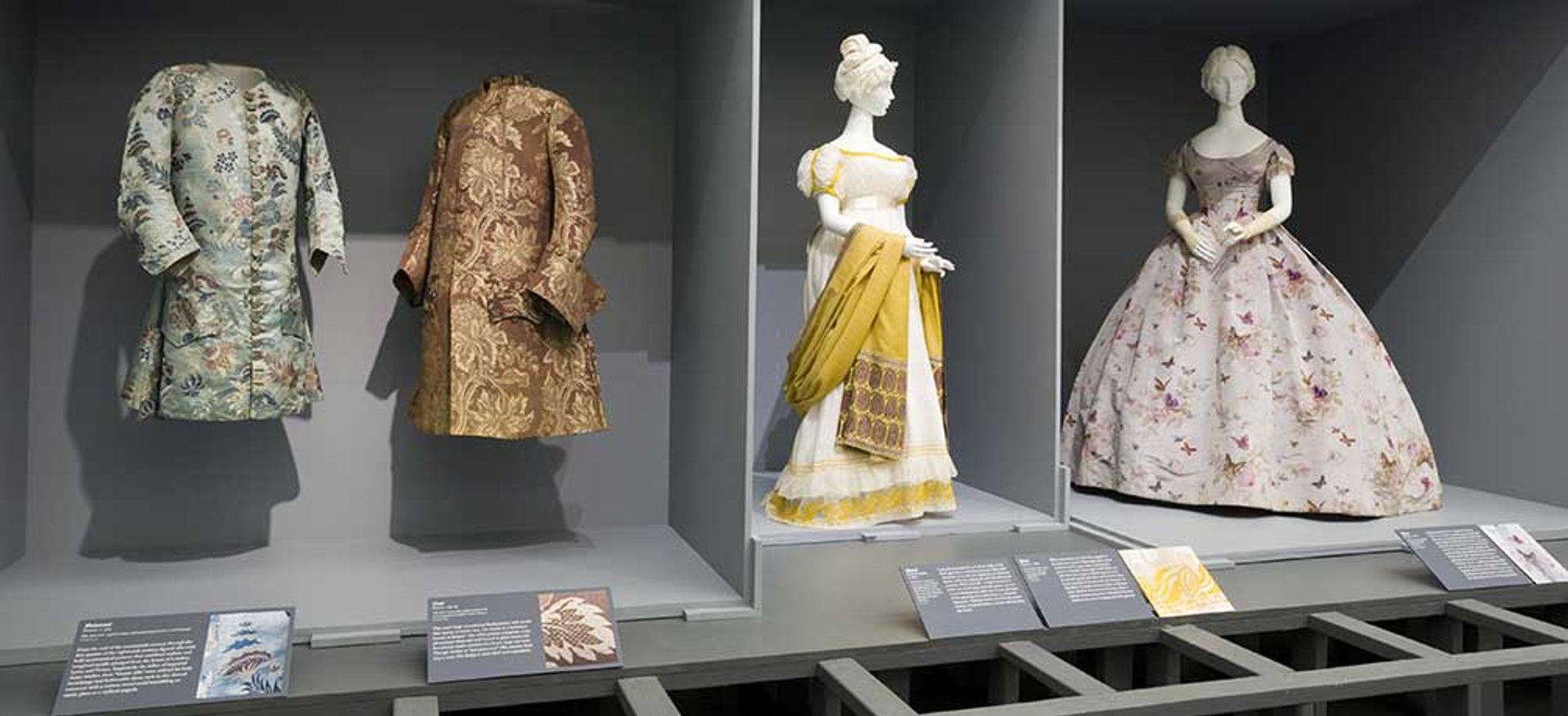
The 2010 exhibition Fashioning Trend: European Costume in Element, 1700-1915 © Museum Associates/LACMA
Thomas, a senior deputy director for artwork administration and collections, is spending the vast majority of her time on the David Geffen Galleries and says that a lot of the artwork there’s new to the museum. “For those who have a look at the guidelines for the Geffen installations, it displays acquisitions largely from the final 20 years, with some main exceptions,” she says. “So whenever you have a look at the installations within the Geffen galleries, they’re actually constructed upon the curators’ pursuits and thematic recognition of the collections that we now have constructed most not too long ago.”
Barron says that museum guests will see some acquainted works after they come into LACMA anew—and that’s on objective. “There may be one large Trendy piece within the new galleries. Matisse’s La Gerbe (1953),” she says. “The massive ceramic piece was very, very rigorously moved into its new residence… and you may see it from the plaza. It’s like an outdated pal greeting you.”