The Kelmscott Press and Sangorski and Sutcliffe, William Shakespeare’s The Poems (1893)
£125,000
Peter Harrington
This primary version guide of Shakespearean poems was printed by Kelmscott Press, the personal press based by the English designer and creator William Morris in 1891. This instance is roofed in an opulent, bejewelled binding from the famend London bookbinders Sangorski and Sutcliffe. The ornament, set with mother-of-pearl and greater than 100 valuable stones, takes inspiration from the sonnets inside. The within again cowl is tooled with gilt flowers—violets, roses, and lilies—talked about in sonnet 99, whereas the within entrance cowl is adorned with hearts and cupid’s arrows for Shakespeare’s love poem, sonnet 116. The guide is described as “a landmark of ornamental guide arts” by Emma Walshe, a uncommon books specialist at Peter Harrington. “Such bindings have been legendary because the lack of [Sangorski and Sutcliffe’s] ‘Nice Omar’ that sank with the Titanic, and this instance stands as probably the most ornate and impressive surviving expressions of the bindery’s craft.”
Emily Kam Kngwarray, Untitled—Winter Awelye (1995)
$380,000
D Lan Galleries
Market curiosity in up to date Australian Indigenous artwork has soared lately, helped by acclaimed exhibits such because the travelling US exhibition The Stars We Do Not See: Australian Indigenous Artwork, which simply closed in Washington, DC, and Tate Fashionable’s lately closed survey on one of many best-known Australian Indigenous artists, Emily Kam Kngwarray (round 1914-96). Kngwarray, a member of the Anmatyerr individuals, holds the public sale document for an Australian feminine artist and the second highest worth for an Indigenous artist, for her work Earth’s Creation I (1994), which bought for A$2.1m (round $1.5m) in 2017.
D Lan Galleries is bringing 13 “museum-quality artworks by artists who’ve formed the trajectory of this dynamic artwork motion” from the Seventies to right this moment, based on D’Lan Davidson, the gallery’s founder and director. These embody this large-scale summary work by Kngwarray, which is known as after awely, the Anmatyerr time period for girls’s songs and ceremonies. The work options Kngwarray’s signature painted dots but in addition demonstrates her transition into extra linear compositions that captured Anwerlarr (pencil yam)—a local plant that holds nice cultural significance. Winter Awelye was painted only a month earlier than one in all her most well-known works, Anwerlarr anganenty (Massive yam Dreaming), a monumental work within the assortment of the Nationwide Gallery of Victoria, Melbourne.
Courtesy Galerie Van den Bruinhorst
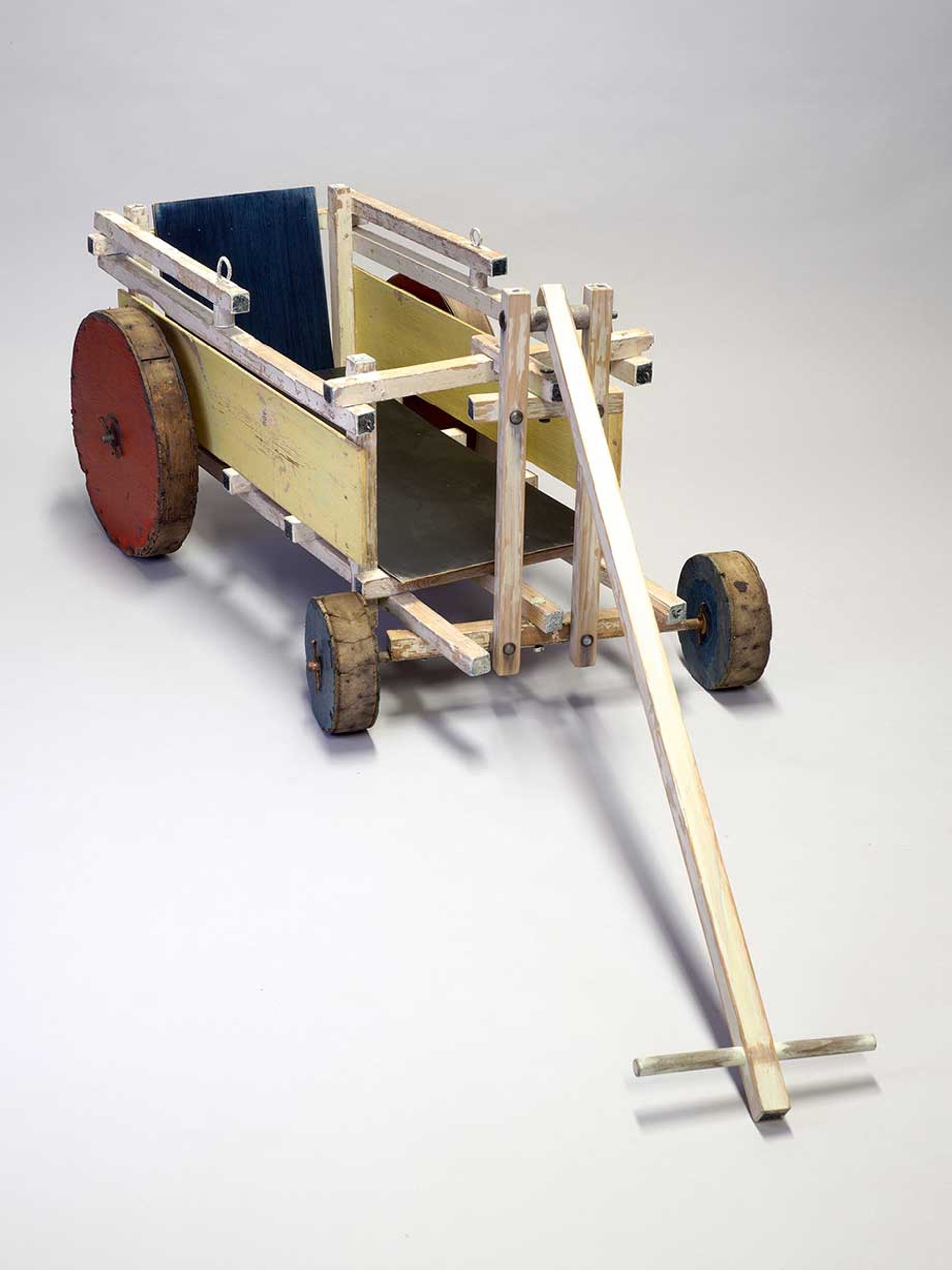
Gerrit Rietveld, Bolderwagen (seashore buggy) (Nineteen Twenties)
€250,000-€300,000
Galerie Van den Bruinhorst
Galerie Van den Bruinhorst’s Tefaf stand is devoted to the Dutch furnishings designer and architect Gerrit Rietveld who, together with artists comparable to Piet Mondrian, was an essential proponent of the De Stijl motion. The gallery’s presentation will present design objects from every decade of Rietveld’s profession, together with this seashore buggy within the distinctive main colors. It’s one in all solely three pre-Second World Warfare examples nonetheless in existence, one other of which is within the assortment of the Centraal Museum Utrecht. Newer variations might be present in Amsterdam’s Stedelijk Museum and London’s Victoria and Albert Museum.
Based on the famend Rietveld restorer Jurjen Creman, the buggy is among the finest documented Rietveld items he has come throughout, having been handed down via generations of the identical Dutch household. At Tefaf, the gallery will present outdated images of the buggy getting used for its supposed objective: to move kids to and from the seashore. Fortunately for its future homeowners, the buggy—fabricated from pine and plywood—has since been fastidiously restored by Creman.
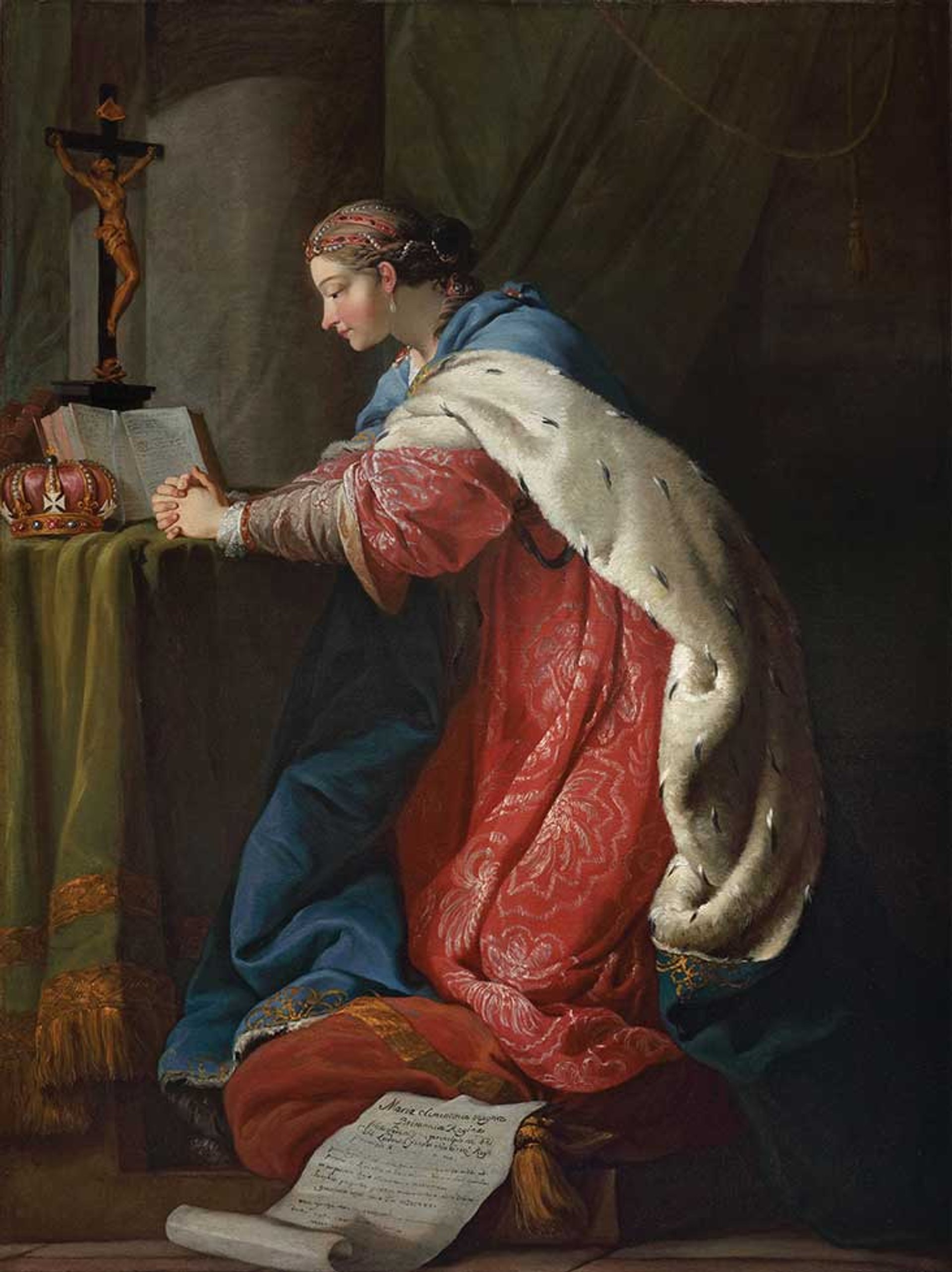
Pierre-Charles Trémolières, Portrait of Maria-Clementina Sobieska (1730)
Round £380,000
Stair Sainty
Stair Sainty is bringing to Tefaf a rediscovered portrait of Maria-Clementina Sobieska (1702-35) by the French artist Pierre Charles Trémolières. She was the granddaughter of Jan Sobieski, the King of Poland; titular Queen of England, Scotland and Eire via her marriage to the Jacobite pretender James Francis Edward Stuart; and the mom of the ill-fated Bonnie Prince Charlie. “There are a lot of engravings exhibiting [Sobieska’s] picture however painted portraits are uncommon,” says the supplier Man Stair Sainty. “There are very good portraits of her husband and sons within the [British] Royal Assortment however solely prints along with her picture.”
This work, painted in the direction of the tip of Sobieska’s brief life, exhibits the noblewoman praying with a crown laid on the altar, a logo of her giving up her royal standing to commit herself to her religion. Beside her is a letter in Latin that names her and denotes the portray as a grateful monument to her “royal munificence”, indicating that it was made for a library to which she donated works.
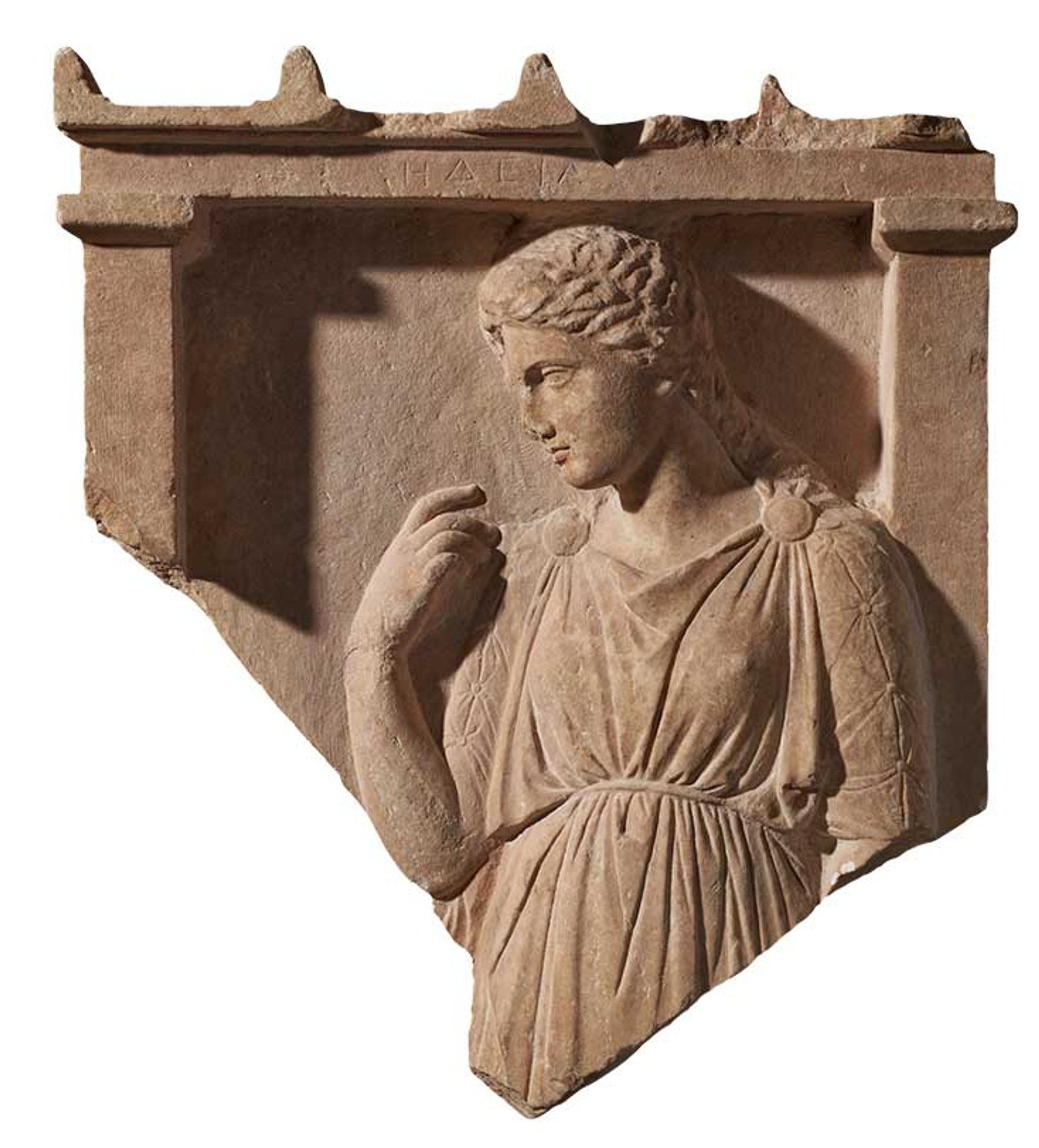
Stele of Medeia, Greek, Attic (round 375BC-350BC)
£450,000
David Aaron
This carved marble gravestone depicts a parthenos (younger single girl), signified by her explicit gown, and her identify: Medeia. Parthenoi held an essential standing in historical Greek society, seen as not kids however not but wives and moms. The artwork historian Linda Jones Roccos proposed in her analysis on the topic that the dying of a parthenos was mourned as each a private and societal loss, provided that the younger girl wouldn’t bear kids to additional the Athenian trigger. As soon as damaged into three elements, the stele has been put again collectively and restored. “The Stele of Medeia is exceptionally uncommon—a museum-quality monument whose magnificence is matched solely by its cultural significance,” says Salomon Aaron, the director of David Aaron gallery. “The piece additionally comes with distinguished provenance having beforehand been owned by the Athenian artwork supplier Theodoros A. Zoumboulakis and the famend Brummer household, who operated artwork galleries in Paris and New York through the twentieth century.”